Moisture mapping surveys for flat roofs
Non-destructive moisture surveys that map retained water across the whole roof, so repair and refurbishment decisions are based on measured data rather than guesswork.
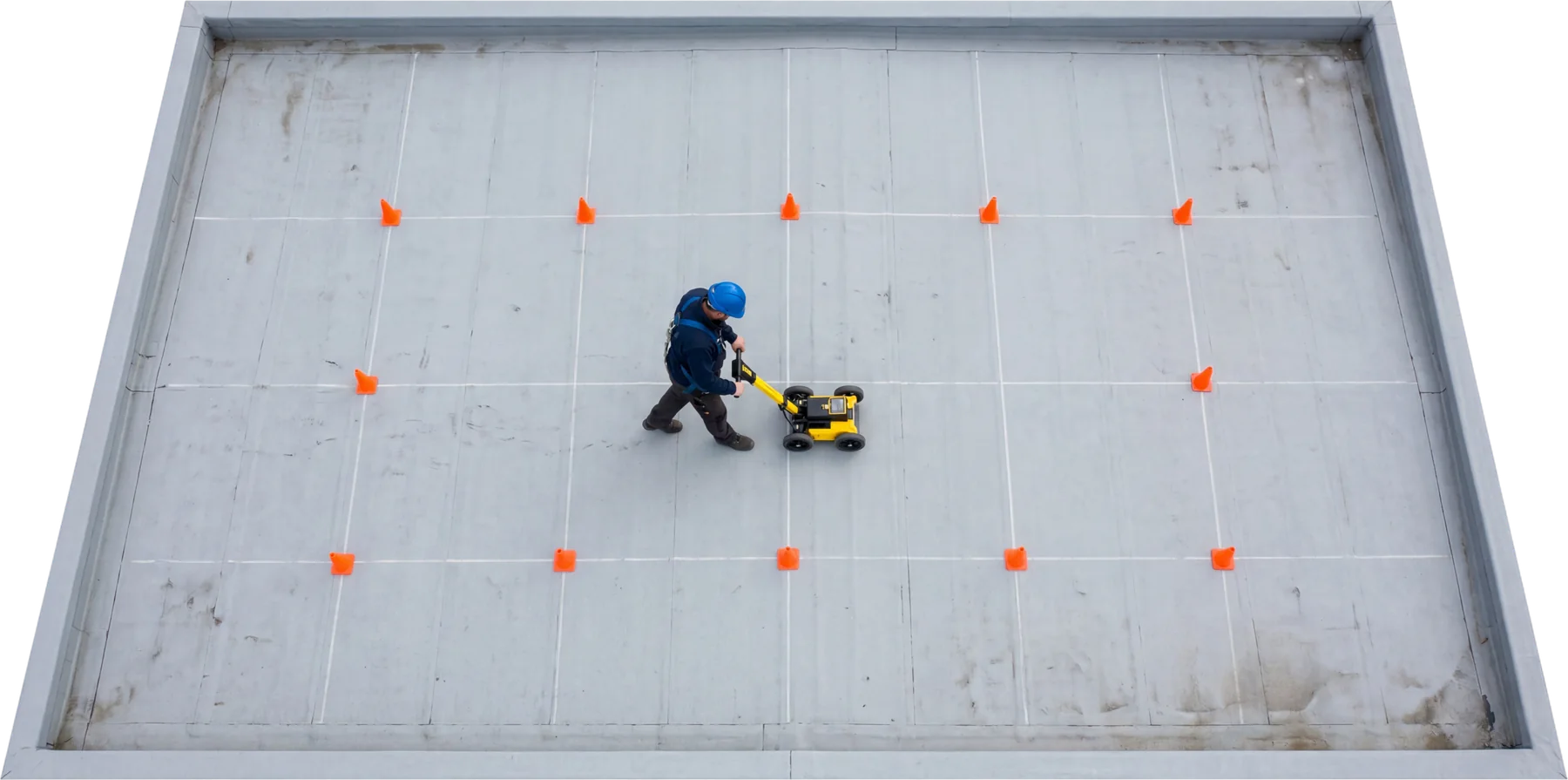
Why moisture mapping
Insight into roof condition without opening it up. Reliable, data-led readings across the whole roof, not just at single points.
Moisture mapping reduces uncertainty when planning repairs or refurbishment, assessing large areas with minimal disruption and distinguishing dry, marginal and moisture-affected zones within the roof system.
Non-destructive testing
Surveys are carried out without damaging the roof covering, assessing large areas while avoiding unnecessary opening-up works.
Large-area coverage
Effective on medium to large flat roofs, highlighting moisture patterns across the roof where isolated core samples alone may not represent overall condition.
Reliable, data-led results
Findings are based on measured readings rather than assumptions, distinguishing dry, marginal and moisture-affected areas within the roof system.
Refurbishment planning
Results determine whether localised repairs, partial refurbishment or full replacement is most appropriate, reducing the risk of over-specification or surprises on site.
The process
A structured survey you can act on. Each stage is carried out methodically so results can be interpreted reliably.
- 01
Pre-survey review
Roof construction, build-up and recent weather are reviewed to confirm moisture mapping is appropriate and results can be interpreted accurately.
- 02
On-site moisture scanning
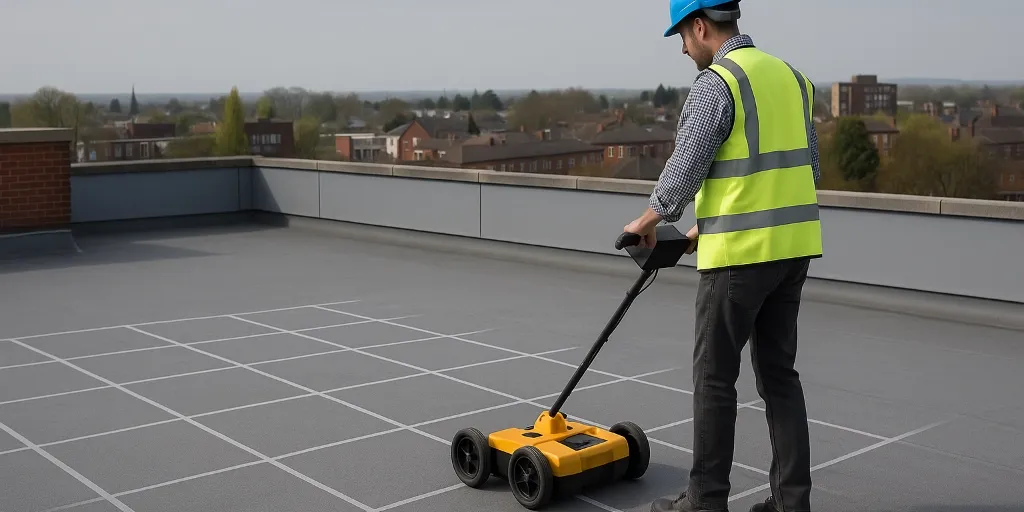
Specialist equipment systematically scans the roof surface, with readings taken across the area to identify variations indicating retained moisture.
- 03
Data analysis
The collected data is assessed to identify moisture patterns and areas of concern, interpreted by experienced professionals against roof type and construction.
- 04
Targeted confirmation
Where required, limited core samples may be recommended to confirm findings in specific locations, reducing widespread intrusive investigation.
- 05
Reporting and next steps
A written report outlines the findings, explains their significance and supports informed decisions on repair, refurbishment or further investigation.
Frequently asked questions
Moisture mapping, answered. Clear, reliable information to support informed decision-making.
When should moisture mapping be carried out?
Moisture mapping is typically used when a flat roof is leaking, showing signs of failure, or being considered for refurbishment. It is also useful during condition surveys to inform long-term maintenance planning.
Is the survey destructive?
Moisture mapping is a non-destructive method. In some cases, limited core samples may be recommended afterwards to confirm findings, but these are targeted rather than widespread.
Can moisture mapping be used on all flat roof types?
It is suitable for many common flat roofing systems, including those that have insulation layers. The roof construction and materials are checked in advance to confirm their suitability.
How accurate are the results?
Moisture mapping provides reliable indicators of moisture presence and distribution. Results are most effective when interpreted by experienced professionals and, where necessary, supported by targeted intrusive checks.
Does moisture mapping replace core sampling?
Moisture mapping and core sampling are complementary. Moisture mapping helps reduce the number of cores needed by identifying where they are most useful.
Will the survey disrupt building operations?
Surveys are typically carried out externally and can often be completed while the building remains in normal use.


Map the moisture before you specify.
Tell us about the roof and a member of our survey team will be in touch to confirm scope and arrange the survey.