Cut edge corrosion treatment and repair
Cut edge corrosion is one of the most common problems affecting commercial and industrial metal roofs in the UK, and usually the first defect a surveyor flags. Allbase treats it end to end, from roof survey and specification through to installation and long-term aftercare.
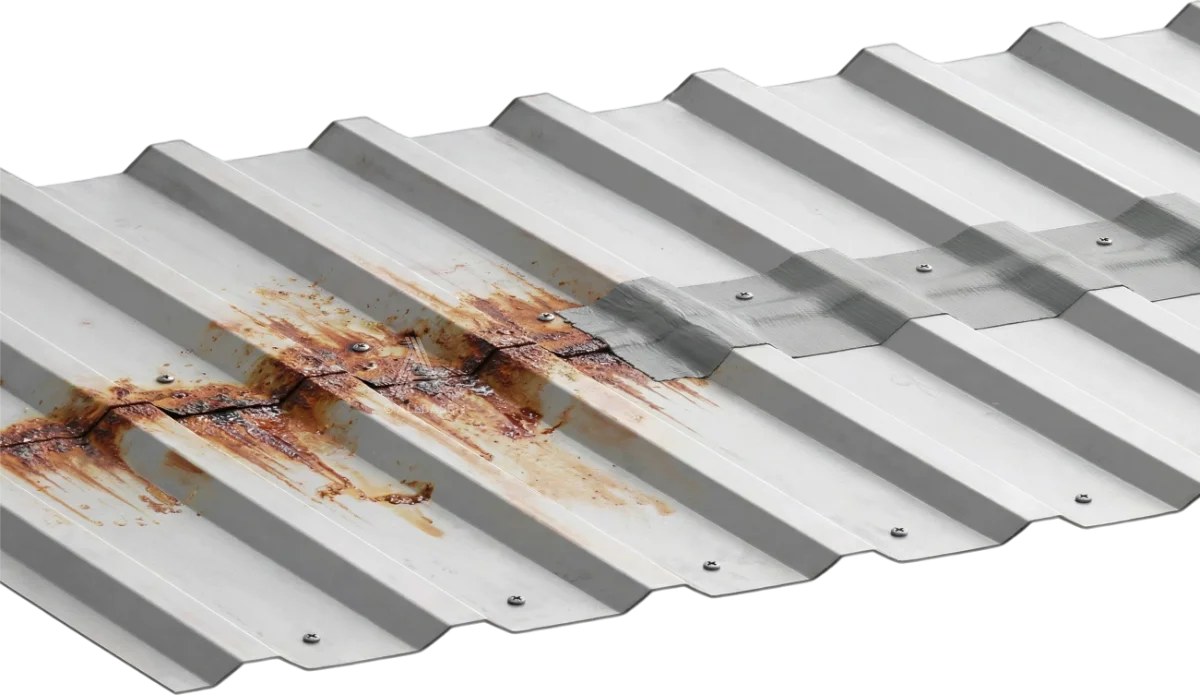
Understanding the problem
What cut edge corrosion is. A small strip of exposed steel that quietly undermines the whole sheet.
Most profiled and corrugated steel roofing in the UK is made with a galvanised zinc layer and a painted or plastisol finish. Those coatings protect the sheet surface, but when a sheet is cut to size the exposed edge reveals a narrow strip of vulnerable steel.
The cut exposes bare steel
Cutting during manufacture or installation removes the protective coating at the edge, leaving the steel open to moisture and oxygen.
Zinc protects, then depletes
The zinc layer gives initial sacrificial protection. Once it is used up, red rust forms and begins to spread along the edge.
Rust tracks under the coating
Corrosion lifts the surrounding paint and creeps inward, weakening the lap joints where rainwater is held by capillary action.
Early signs
What to look out for. The earlier it is caught, the simpler and cheaper the repair.
Cut edge corrosion is normally found at the edge of sheets, but the vulnerable points are predictable. Inspecting twice a year, and after extreme weather, lets a minor issue be treated before it reaches the substrate. Roofs over 15 years old warrant particular attention.
Spotting the problem early is the difference between a localised edge treatment and a full sheet replacement. The signs below are where to start.
- 01Sheet edges and lapsRust staining or coating that is peeling and curling, most often at horizontal laps between sheets.
- 02Eaves and gutter linesThe bottom of eaves stays wet longest, so corrosion tends to begin and spread there first.
- 03Fixing pointsDegraded washers at fixings allow water ingress, starting corrosion around the fastener heads.
- 04Blistering away from the edgeVapour trapped under the coating can blister the surface even where no break is visible.
Why it happens faster here
The UK climate accelerates it. Wet, salt-laden and changeable conditions all push the process along.
Corrosion is an electrochemical reaction: where moisture and oxygen meet exposed steel, oxidation forms rust. The UK climate keeps that reaction running for much of the year.
Rain and humidity
Frequent rainfall and high humidity keep exposed edges wet, preventing the steel from drying and sustaining oxidation.
Coastal salt
Airborne salt in coastal areas speeds oxidation, while industrial and urban pollutants raise corrosion rates further.
Freeze-thaw movement
Seasonal temperature swings expand and contract the sheets, micro-cracking coatings and exposing fresh metal.
Across the UK, most commercial and industrial roofs sit in the C3 to C5 exposure categories defined by BS EN ISO 12944, with coastal and heavy industrial sites at the most aggressive end.
Treatment options
How it is treated, honestly. Not every method lasts, and the difference is mostly in the preparation.
In most cases cut edge corrosion can be repaired without replacing sheets. The systems on the UK market range from basic overpainting to reinforced encapsulation, and long-term performance depends far more on correct preparation, film thickness and application than on the product alone.
| Approach | What it involves | Typical outcome |
|---|---|---|
| Basic overpaintTouch-up coating | A coating brushed over the affected area with little surface preparation. Lap joints are often sealed with silicone mastics or tapes. | Short-term. Mastics and tapes tend to lift on the profile corners, so protection at the lap can be unreliable. |
| Seal and coatPrepared edge system | Loose coating and rust removed, the edge stabilised, then a flexible sealant and protective coating applied at the correct film thickness. | Long-term when prepared and applied properly. Restores protection at the most vulnerable part of the sheet. |
| Encapsulation systemAllbase liquid-applied | A BBA approved, C5 rated liquid system that encapsulates the edge and lap, accommodating thermal movement and impervious to standing water. | Highest protection. Seamless barrier with lifespans over 30 years and a Basecare guarantee. |
The honest point is this: a cheap touch-up can buy time, but if the lap is not properly prepared and sealed, water tracks back in by capillary action and the corrosion returns. The method matters more than the marketing.
Why specify Allbase
Systems tested to the highest standards. Independently verified performance, not claims.
Allbase liquid-applied systems are designed for the gutter and roof environment, where standing water and constant movement defeat lesser treatments. The credentials below are independently assessed.
C5 and BROOF(t4) rated
The highest corrosion and fire ratings in Europe, with BROOF(t4) now a standard requirement on UK new build.
6m water head, impervious to standing water
Passed a 6 metre water head test for gutters that hold water and drain poorly for most of the year.
Fast cure, low odour
Curing in as little as 30 minutes with very low odour, suited to occupied and sensitive commercial sites.
Over 30 year lifespans
UV resistant and durable, designed to extend the life of the roof rather than defer the problem.
BBA approved
Independently assessed by the British Board of Agrément, the recognised mark of fitness for purpose.
Specified for the application
The right system matched to roof size, exposure category and condition, rather than one product for every job.
End to end, under one roof
Survey to aftercare, handled as one process. The part competitors find hardest to copy.
Allbase does not treat corrosion as an isolated patch repair. It is managed as part of a roof asset strategy, from the first survey through to long-term monitoring, with the right approved contractor matched to the job.
- 01
Survey
A technical roof condition survey, including drone inspection where access is difficult, with a clear written report.
- 02
Specify
The correct system specified for the roof size, exposure category and condition, with no guesswork.
- 03
Install
Installation by a matched contractor from the nationwide approved network, trained on the system.
- 04
Guarantee
A Basecare guarantee covering both the material and the installation, issued on completion.
- 05
Aftercare
Structured maintenance and monitoring to intervene early, before deterioration affects the structure.
Recent work
Cut edge corrosion treated in the field. Real commercial and industrial roofs protected by the approved network.
Basecare guarantees
Backed for the long term. Cover for the material and the installation, not just the tin.
Go deeper
Read more on cut edge corrosion. Guides covering the detail behind each part of the problem.
Common questions
Frequently asked questions. Learn more about treating cut edge corrosion.
Can cut edge corrosion be repaired without replacing the roof?
In most cases, yes. Provided the corrosion has not destroyed the sheet, a purpose-designed edge treatment restores protection at the laps and edges without the cost and disruption of re-sheeting. A survey confirms whether repair or replacement is appropriate.
How often should I inspect for it?
At least twice a year, and after extreme weather. Roofs over 15 years old, and those in coastal or industrial areas, warrant closer attention because corrosion progresses faster in those conditions.
Why does corrosion start at the cut edge specifically?
The factory coating ends at the cut, exposing a narrow strip of bare steel. The galvanised zinc gives initial protection, but once it depletes the steel rusts and the corrosion tracks back under the surrounding coating.
What makes the lap joints such a problem?
Rainwater is held in the overlap by capillary action and surface tension. That held water penetrates the coating over time, which is why a treatment has to seal and accommodate movement at the lap, not just paint over the surface.
Is overpainting enough?
A basic overpaint can buy time, but without proper preparation and a sealant that stays bonded at the profile corners, water tracks back in and the corrosion returns. Long-term performance depends on preparation, film thickness and application.
How disruptive is the work?
Liquid-applied systems are low odour and fast curing, in some cases within 30 minutes, so work can usually proceed with minimal disruption to building occupants or operations.
What does the guarantee cover?
The Basecare guarantee covers both the material and the installation, for up to 20 years depending on the system and roof condition. It is issued on completion by the approved contractor.
What does a survey involve?
A technical assessment of the roof surface, laps, fixings and drainage, including drone inspection where access is difficult, followed by a written condition report and a specification matched to the roof.
Ready to start?
Request access to browse and specify, or schedule a consultation to talk through your project with one of our specialists.
Schedule a consultation
Arrange a phone call with a specialist to discuss your application.
Choose a time