RAAC roof surveys, assessment support and low-disruption remediation
A practical, evidence-led route through RAAC for the teams responsible for schools, hospitals and commercial estates. Roofing-led protection that controls water ingress and extends the usable life of the roof, planned around how your building runs.
The material
What RAAC is, and why it fails. A lightweight concrete with a limited service life that the original design assumptions did not anticipate.
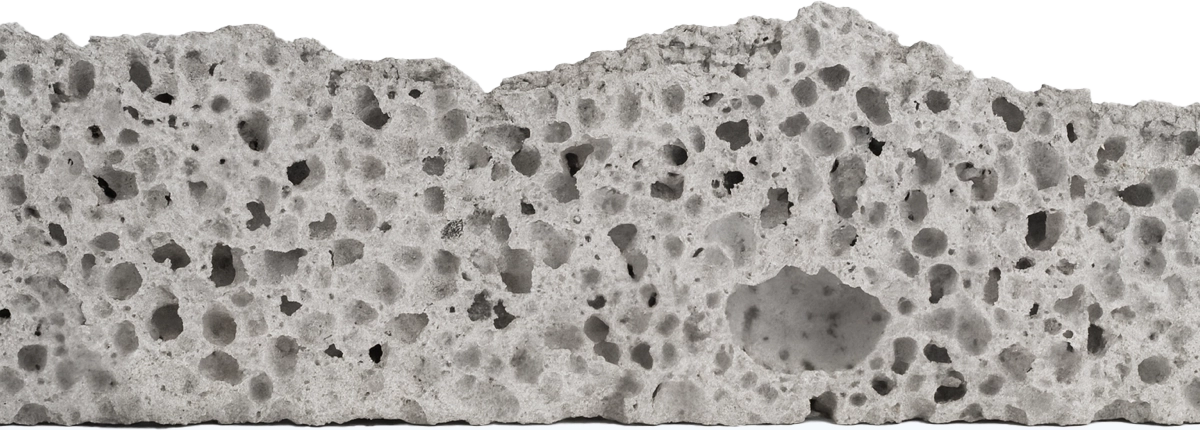
Reinforced autoclaved aerated concrete is a lightweight precast concrete used widely in UK roofs between the mid-1950s and mid-1990s. It contains no coarse aggregate, which makes it light and quick to install but far less durable than traditional concrete. Most planks were designed for a service life that many have now passed.
An open, porous structure
The aerated cellular structure has low strength and absorbs water readily. Once moisture reaches the embedded steel reinforcement, corrosion begins and the plank loses capacity from the inside.
Water is the main driver
A failing roof covering is often the first cause of deterioration. Water ingress accelerates reinforcement corrosion and weakens the bearing ends, which is why roof condition matters so much to RAAC safety.
Failure can be sudden
Affected planks can deflect, crack at the bearings or, in the cases that prompted the 2023 closures, fail with little visible warning. Visual condition alone is not a reliable guide to remaining strength.
Early signs
What to look out for. Indicators that a roof should be checked by a competent professional.
None of these confirm RAAC on their own, and none should be used to judge whether a roof is safe. They are reasons to commission a proper inspection rather than wait.
- Flat or shallow-pitched roofs on buildings from the 1950s to 1990s
- Visible deflection, sagging or ponding across roof bays
- Cracking near the ends of panels where they bear onto walls or beams
- Soft, chalky soffits that mark easily under light pressure
- Evidence of past or active water ingress and staining
- V-shaped grooves on plank undersides, often at around 600mm spacing
The service
A complete roofing-led response to RAAC. Survey, protection and ongoing care, coordinated as one programme.
Because water ingress is the main driver of RAAC deterioration, the roof is where much of the risk can be managed. We survey the roof, control the moisture reaching the structure, and protect it with low-disruption systems that extend usable life, with everything held together by one specialist team.
Survey and investigation
A thorough roof survey records condition, coverings, drainage and any water ingress, building a clear picture of the affected areas and what they need.
Protection and remediation
Liquid-applied waterproofing and low-disruption refurbishment halt the moisture that corrodes reinforcement, stabilising performance and extending roof life.
Coordination and aftercare
We coordinate the works programme around your building and provide planned monitoring and maintenance, so issues are caught early and managed in good time.
Remediation, honestly
Full removal is rarely the only answer. The right strategy depends on the structural assessment, not a default.
Where the structure allows, protecting and managing RAAC in place is usually faster, cheaper and far less disruptive than replacement. We help you weigh the realistic options rather than reaching for the most expensive one.
- Protect and manageOften first choice
Where the roof is suitable, a liquid-applied system creates a seamless waterproof barrier. This removes the water ingress driving corrosion, stabilises the roofing performance and extends usable life. Combined with planned monitoring, many roofs can be safely managed in place for years.
- Stabilise, then protectInterim
Where panels need securing first, stabilisation is arranged before any surface works. Temporary protection and controlled access keep the building usable while a permanent plan is developed.
- Controlled removalLast resort
Where RAAC is beyond repair or assessed as high risk, full replacement is the safe route. We keep the roof protected through the works and plan around continuity, but this is recommended only when no safer method exists.
How it works
Survey to aftercare, handled as one programme. One coordinated team across the parts that usually fall between trades.
RAAC work fails when responsibilities are scattered. We hold the whole programme together, from first survey through to long-term aftercare.
- 01
Roof survey
We record the roof condition, coverings, drainage and any water ingress, and map the areas of concern to inform the structural assessment.
- 02
Assessment
The condition of the roof and structure is assessed and the affected areas confirmed, so the right protection strategy can be agreed with confidence.
- 03
Options appraisal
We set out the realistic remediation routes with costs and disruption for each, so the decision is informed rather than defaulted.
- 04
Remediation
We install the agreed liquid-applied protection, or coordinate stabilisation and replacement works where these are the safer route.
- 05
Monitoring
For roofs managed in place, planned inspections track any change over time and keep the protection performing as intended.
- 06
Aftercare
Ongoing maintenance and a clear record keep your estates team ahead of developing issues and support long-term planning.
Handled with care
RAAC rarely comes alone. Buildings of this era often contain asbestos and other legacy materials.
Because RAAC and asbestos were used in the same period, any disturbance carries additional risk. Our surveys and works are planned around this from the outset, with the correct procedures followed and specialist investigations coordinated before remediation progresses.
Non-intrusive first
We use non-intrusive inspection wherever possible, and where opening-up is needed we carry out the minimum required under full health and safety controls.
Coordinated investigations
Where asbestos or other legacy materials are encountered, we advise on next steps and help arrange the specialist surveys that must precede any works.
Continuity managed
Most buildings stay operational through survey and roofing-led works, with clear guidance where temporary access restrictions are unavoidable.
Who we support
Built for the estates carrying the obligation. Schools, NHS facilities, councils and commercial portfolios.
We understand the operational pressure these environments are under, and plan inspections and works around safety, scheduling and keeping buildings running.
Education estates
Schools, academies and colleges managing RAAC obligations alongside daily operation and term-time constraints.
Healthcare and public sector
NHS facilities and council estates working to national programmes, where continuity of service is critical.
Commercial portfolios
Owners and facilities teams managing risk and liability across older industrial and commercial buildings.
Read more on RAAC
Guidance behind each part of the problem. Plain-English background for the people making the decisions.
Questions
Frequently asked questions. What to expect at each stage of a RAAC roof programme.
How long will a RAAC roof survey take?
It depends on the size and complexity of the building and how accessible the roof is. Smaller properties can often be surveyed in a single visit, while larger or multi-block sites may need additional time to assess the whole roof area properly.
Do you need to make holes when surveying?
We use non-intrusive methods wherever possible. Where key elements are concealed, small opening-up may be needed to verify panel bearing or reinforcement. We carry out only the minimum required and follow all health and safety protocols.
How is the condition of the RAAC assessed?
Assessment combines a roof survey with structural evaluation of the panels, looking at condition, bearing and any deterioration. We talk through what your building needs during the initial consultation and plan the right level of investigation from there.
Who should be involved from our side?
Typically those responsible for building safety, maintenance or strategic oversight, such as facilities managers, estates teams, senior leaders or property managers. We can advise on who to involve during the initial consultation.
Will the building need to close?
Most buildings stay operational during surveys and roofing-led works, which are planned to minimise disruption. Where temporary closures or restricted access are required, we help plan the safest approach around daily activities.
What if asbestos is present?
Buildings of the RAAC era frequently contain asbestos or other legacy materials. Where these are encountered we follow the correct procedures, advise on next steps and help coordinate the specialist investigations needed before remediation progresses.
Can liquid-applied systems be used on RAAC?
Yes, where the roof is in suitable condition to accept the application. These systems form a seamless waterproof barrier that limits moisture ingress and extends the usable life of the roof. We confirm suitability as part of the survey and assessment.
What if the roof is assessed as unstable?
If the roof is too unstable for surface works, the safe approach is to secure the panels first. Temporary protection, stabilisation or controlled access are used while a more suitable remediation plan is developed.
What will the report include?
The report records the condition of the covering, evidence of water ingress, the condition of the affected areas, and the recommended options for protecting or managing them, with clear next steps.
Do you work with public-sector buildings?
Yes. Our services are designed to support schools, academies, NHS facilities, councils and commercial estates, with works planned around safety, scheduling and disruption management.
Ready to start?
Request a RAAC roof assessment, or schedule a consultation to talk through your building and obligations with one of our specialists.
Schedule a consultation
Arrange a phone call with a specialist to discuss your application.
Choose a time