Gutter monitoring sensor. Raises the alarm before a blockage does any damage.
Smart gutter monitoring from Allbase. Solar powered, wireless and maintenance-free.
The sensor clamps to the front edge of an existing gutter, records standing water, rainfall and temperature, and sends the readings over the mobile network to the Allbase portal. If water exceeds a set level, or stands while no rain is falling, an alarm goes out by email or SMS. Supplied, supported and serviced in the UK and Ireland.
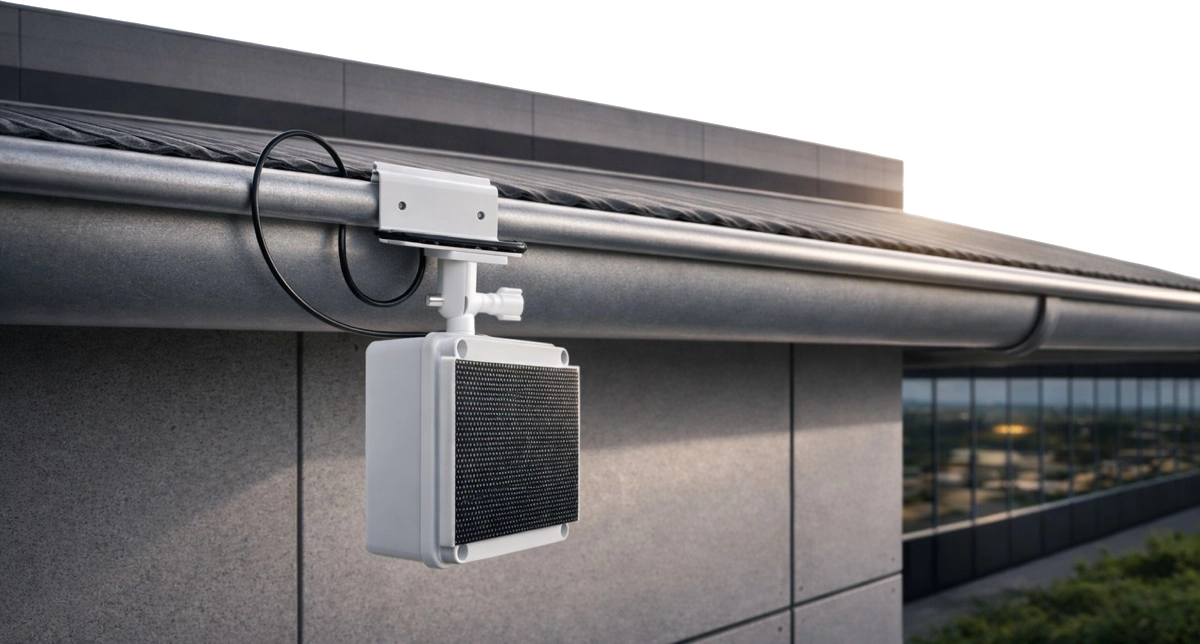
Alarm for standing water, before a blockage.
How it worksSolar powered, with no battery changes.
The sensorClamps to the gutter edge. No drilling.
FittingAlerts by email, SMS or into a BMS.
Alert optionsCatch the blockage, not the leak. A gutter does not fail overnight. It clogs up over weeks, and the problem is usually noticed once water is running down the facade or showing up inside.
Leaves, silt and debris build up out of sight, and by the time water is spilling over the eaves or tracking into the fabric of the building the damage is done. The harder a gutter is to reach, the less often anyone looks inside, so on a building that needs a lift or scaffold to get to the gutter a blockage can sit unnoticed for a season.
The gutter sensor watches the gutter around the clock. A probe on the gutter bottom detects standing water, a rainfall reference on the bracket records current rainfall, and the two together tell a blockage apart from a downpour: water that stands while no rain is falling is the signal. Temperature is recorded as well, as a frost warning. Readings reach the portal typically once an hour, and the gutter gets cleaned when it needs it, not on a calendar.
Measure, transmit, alert. Three steps from a reading in the gutter to a message on someone's phone.
- 1
Measure
The probe and the rainfall reference record standing water, rainfall and temperature, typically once an hour. The interval can be adjusted remotely.
- 2
Transmit
The solar gateway sends the readings over NB-IoT or LTE Cat-M to the Allbase portal, around the clock. No site network and no wiring.
- 3
Alert
If water exceeds a set level, or stands while no rain is falling, an alarm goes out by email or SMS to the people you choose, or into a building management system where that has been set up.
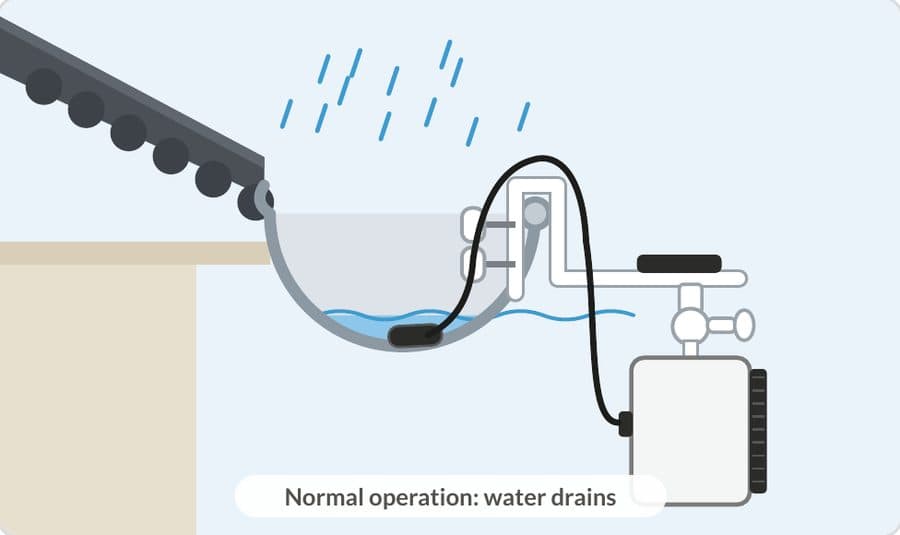
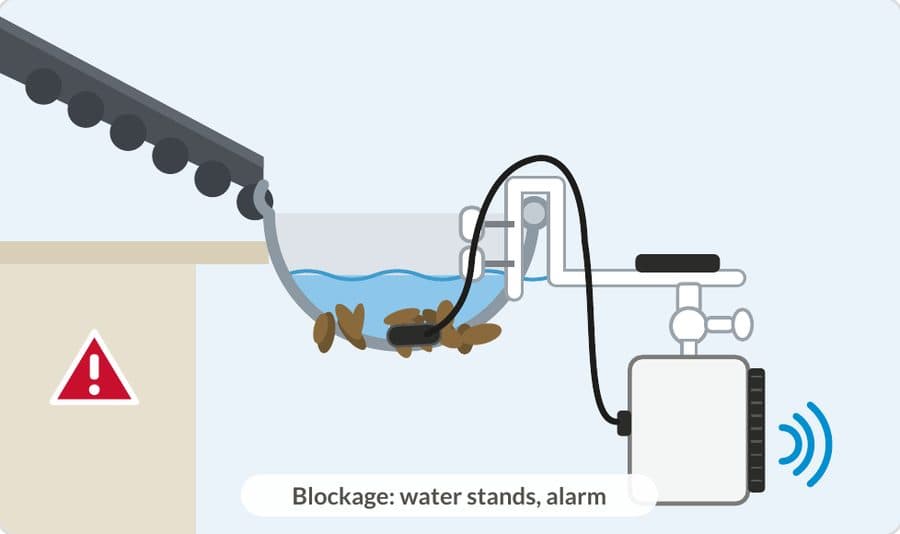
One unit, five parts. Gateway, mount, bracket, rainfall reference and probe, with the SIM included.
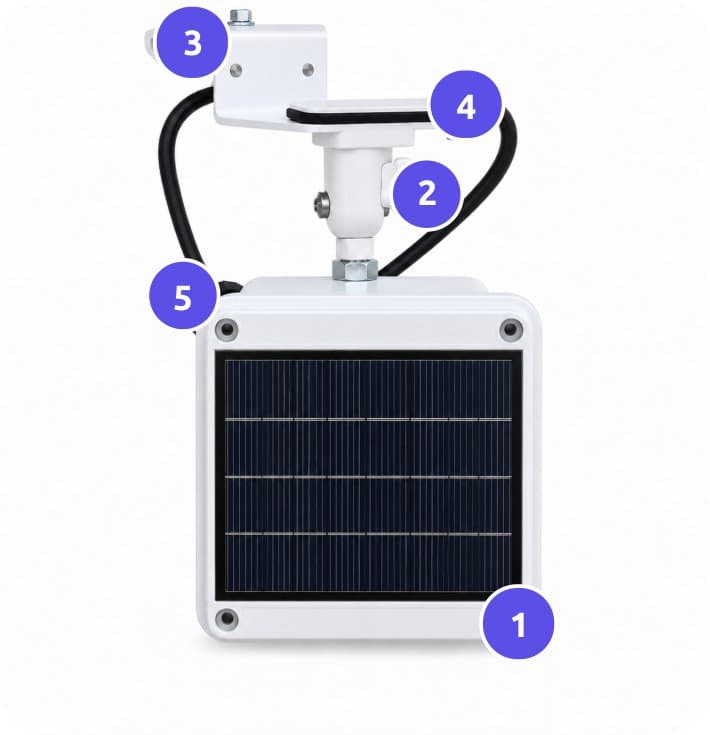
- 1
Gateway with solar panel
The electronics and the NB-IoT or LTE Cat-M transmitter in one weatherproof housing, IP67 with the antenna inside, powered by the solar panel on its face. The device ID is on the label.
- 2
Swivel mount
A ball joint with a thumbscrew, so the panel can be turned through 360 degrees to face the light.
- 3
Clamp bracket
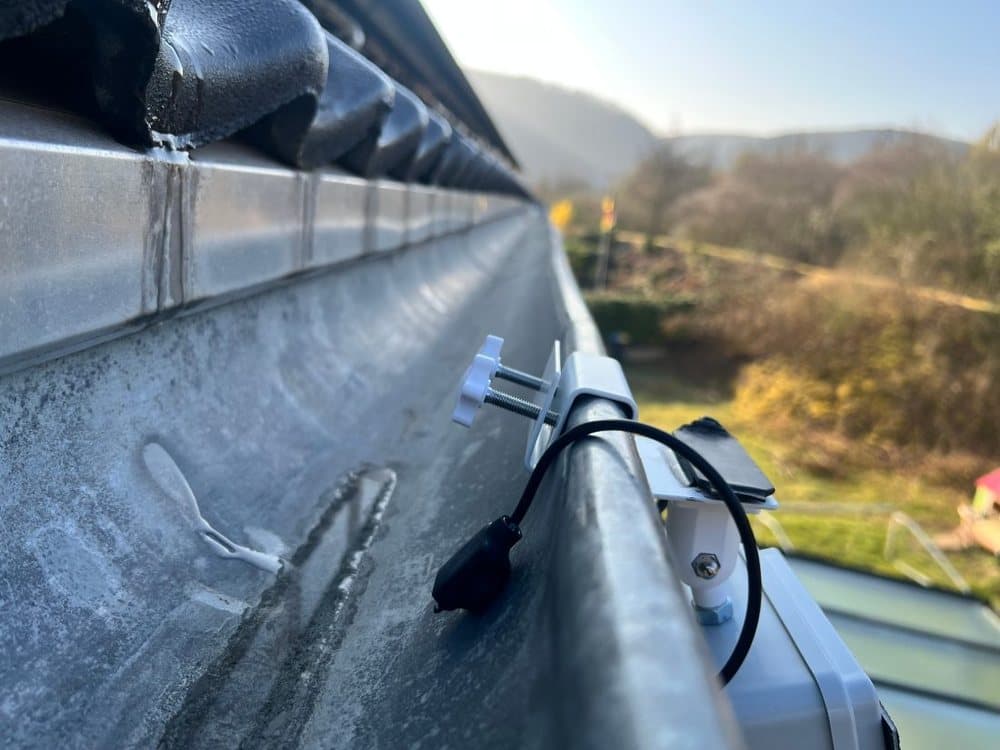
A U-profile with two thumbscrews that clamps onto the front edge of the gutter. No drilling. The clamp and the sensor cable length can be adapted to suit different gutter profiles, valley gutters included.
- 4
Rainfall reference
A sensor pad on the bracket that records current rainfall, so standing water can be told apart from rain.
- 5
Sensor cable with probe
The probe lies on the gutter bottom and detects standing water.
Technical data. From the product sheet and brochure, edition 10/2026. Specifications subject to change.
| Measured | Standing water (capacitive probe), rainfall, temperature; typically hourly, adjustable remotely |
|---|---|
| Power | Solar, charges from daylight; 40 to 50 readings in reserve without sun |
| Communication | NB-IoT or LTE Cat-M, international SIM included |
| Alerts | Email and SMS to multiple recipients, thresholds set remotely; BMS and alarm platform integration via online options |
| Enclosure | IP67, antenna inside; operating temperature −20 °C to +60 °C |
| Size and weight | Approx. 20 × 25 × 15 cm (W × H × D), around 500 g |
| Installation | Retrofit, clamp bracket on the gutter edge, no drilling; typically 10 to 15 minutes on a standard gutter |
| Connectivity | SIM and data supplied on a monthly plan; one international SIM covers the UK and Ireland with no local contracts |
| Warranty | 12 months on the hardware |
Fitted in 10 to 15 minutes. Clamp the bracket to the gutter, align the solar panel and lay the probe. No drilling, no wiring, no battery changes.
- 1
Prepare the gutter
Remove leaves, dirt and deposits at the clamping point and where the probe will lie, and check the front edge of the gutter for damage.
- 2
Clamp the bracket
Place the U-profile over the front edge of the gutter from above and tighten both thumbscrews evenly by hand, without deforming the gutter.
- 3
Align the solar panel
Loosen the joint, turn the gateway so the panel faces the light and tighten again. The gateway hangs freely on the outside of the gutter, and the panel charges from ordinary daylight, not only direct sun.
- 4
Lay the probe
Route the cable over the front edge with a loose loop and lay the probe on the gutter bottom where water would collect, for example near the downpipe inlet. Then check the first readings in the portal.

Flat roofs and rainwater drains
Where a flat roof drains to a central outlet and there is no gutter, the bracket can be clamped at the roof drain or the roof edge, or stood on ballast, with the probe at the drain. Agree the mounting details and cable routing with Allbase before fitting.
Before you fit
A normal phone signal at the gutter is a good first indication of coverage, and doubtful sites can be checked with a demo device. Fitting needs the owner's or operator's approval, safe access to the gutter and the usual care when working at height.
Where a look in the gutter costs time. Roof gutters, rainwater drains and flat roofs, on one building or a whole estate.
Commercial buildings
Offices, retail, warehouses and industrial units, where a blocked gutter can reach stock, equipment and people.
Residential blocks and estates
Housing blocks and estates where gutters are hard to reach and easy to forget, and portfolios of similar buildings on a fixed maintenance cycle.
Railway station roofs
Station roofs and transport buildings, with alarms fed into the building management system.
Every gutter, in one view. The Allbase portal, live on any device.
Each sensor reports as conditions develop, not when someone next goes up a ladder. Alarms arrive with the readings behind them, so the team can check what is happening and send someone out only when it counts.
The right people told at the right moment. Every alarm arrives with the readings behind it.
Thresholds are set remotely and alarms go to as many recipients as you need, so the person who can act hears first and a site visit happens only when it counts.
An alarm by email to multiple recipients, with the gutter and the readings behind it ready to check in the portal.
Text message
The same alarm by SMS for duty engineers and maintenance teams who are not at a desk.
Building management system
Alarms can also be passed into an existing BMS or alarm platform, alongside the portal, where that has been set up.
Questions about the gutter sensor. What it measures, where it fits and what happens on an alarm.
What does the gutter sensor measure?
Three things: standing water in the gutter, through a capacitive probe on the gutter bottom; current rainfall, through a reference pad on the bracket; and temperature, which is recorded as a frost warning. Readings are taken typically once an hour and the interval can be adjusted remotely.
How does it tell a blockage from heavy rain?
By combining the two readings. Rain alone says little and standing water alone says little, but water that stands in the gutter while no rain is falling is the signal, and that is what raises the alarm. An alarm also goes out if the water exceeds a set level.
Will it fit my gutter?
The clamp bracket is a U-profile that fits over the front edge of the gutter and tightens with two thumbscrews, so it suits standard gutter profiles without modifying the gutter. The clamp and the sensor cable length can be adapted to suit different gutter profiles, valley gutters included. The gutter needs a stable, undamaged front edge for the clamp. On a flat roof with a central drain there are three alternative mounting methods, agreed with Allbase before fitting.
Does it need a battery or mains power?
No. The gateway runs on its solar panel, which charges from ordinary daylight, and holds 40 to 50 readings in reserve without sun. There is nothing to wire and no battery to change on the roof.
What if the site has a poor mobile signal?
Readings travel over NB-IoT or LTE Cat-M on the included international SIM, which covers the UK and Ireland with no local contracts. A normal phone signal at the gutter is a good first indication, and doubtful sites can be checked with a demo device before you commit.
What happens when an alarm comes in?
Inspect the gutter and downpipe, clear the blockage, then watch the readings in the portal return to normal. Outside of alarms the sensor needs no attention beyond a check of the bracket, cable, probe and solar panel during routine gutter cleaning.
What is included, and how is it priced?
The sensor unit with its SIM, 12 months warranty on the hardware, and access to the portal and alerts, with connectivity supplied on a monthly plan. Pricing is quoted against your site and the number of sensors: add the sensor to a quote or make an enquiry and you will get current pricing back with the product sheet and installation guide.
Ready to start?
Request access to browse and specify, or schedule a consultation to talk through your gutter monitoring requirements with one of our specialists.
Schedule a consultation
Arrange a call with a specialist to talk through your gutters, access and alert routing.
Choose a time